Enterprise teams carefully vet traditional software packages, yet AI models downloaded from public repositories are often treated as simple data files, even though many formats can execute code when loaded. This creates a significant and underrecognized supply-chain risk, where a malicious model file can silently compromise systems the moment it is opened.

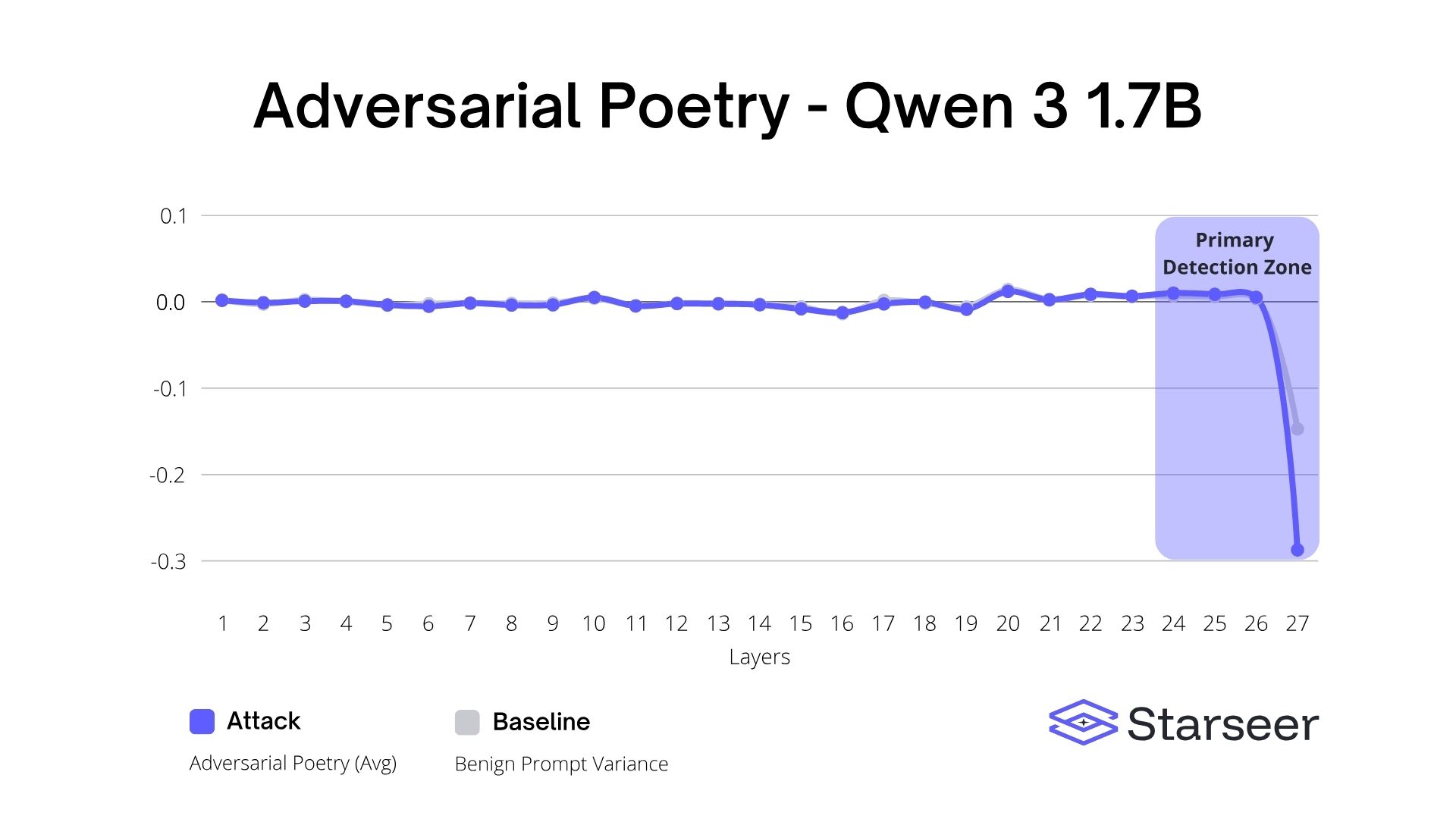
A recent “adversarial poetry” jailbreak claimed to be too dangerous to release. Using Starseer’s interpretability-based analysis, we reconstructed similar prompts, tested them across Llama, Qwen, and Phi models, and uncovered consistent, model-internal anomaly signatures that make detection possible—even without knowing the original attack prompts.

Enterprise teams carefully vet traditional software packages, yet AI models downloaded from public repositories are often treated as simple data files, even though many formats can execute code when loaded. This creates a significant and underrecognized supply-chain risk, where a malicious model file can silently compromise systems the moment it is opened.

A recent “adversarial poetry” jailbreak claimed to be too dangerous to release. Using Starseer’s interpretability-based analysis, we reconstructed similar prompts, tested them across Llama, Qwen, and Phi models, and uncovered consistent, model-internal anomaly signatures that make detection possible—even without knowing the original attack prompts.
From industrial systems to robotics to drones, ensure your AI acts safely, predictably, and at full speed.