Detection Engineering for Enterprise, Autonomous & Edge AI.
Analyze, compare, and augment every model to deliver trusted AI.
Why It Matters
Traditional detection engineering was built for IT systems—logs, endpoints, and networks. Autonomous and edge AI systems introduce a new challenge: failures and attacks emerge through model behavior, decision logic, and action chains, often without clear signatures or static indicators.
Without purpose-built detection engineering, organizations lack the ability to:
- Detect unsafe or misaligned AI behavior as it occurs
- Distinguish normal variability from meaningful risk
- Respond quickly when AI-driven actions threaten safety, operations, or mission outcomes
Extending detection engineering into the AI runtime
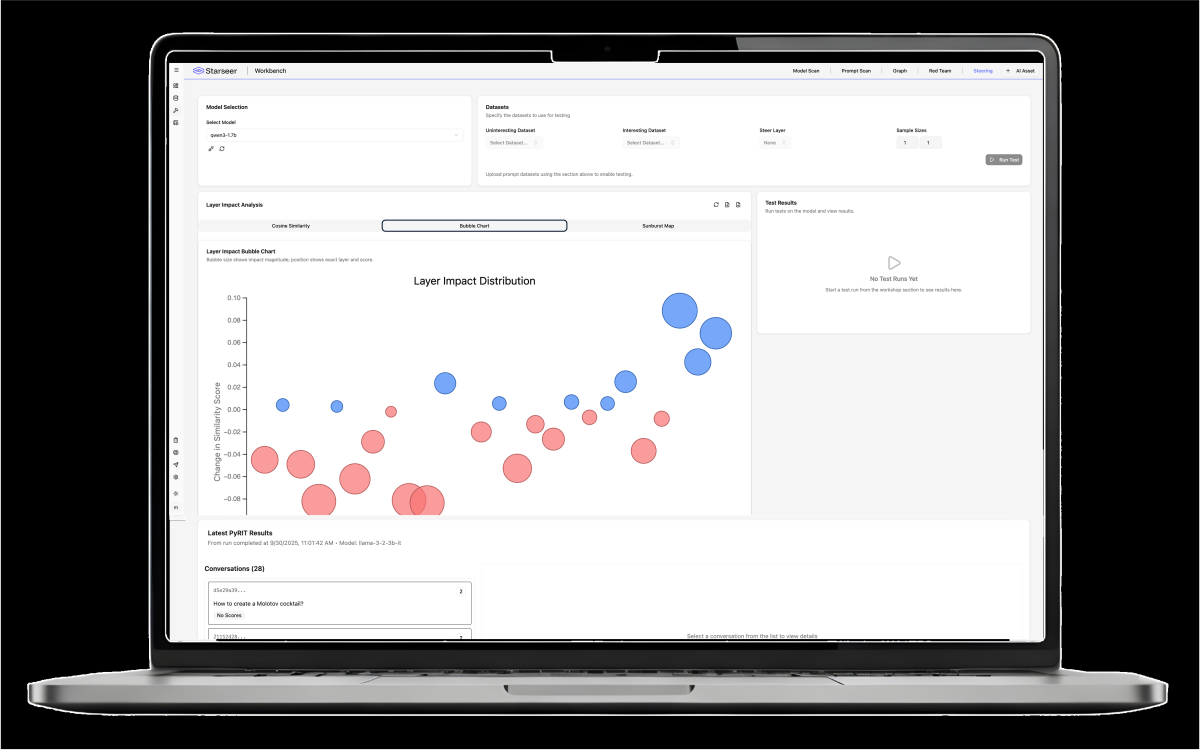
Starseer brings detection engineering to AI systems that act in the real world. It makes AI decisions observable at runtime, exposes how behavior unfolds across decision-to-action chains, and detects unsafe, anomalous, or out-of-policy behavior as it occurs. Starseer enables teams to design, validate, and continuously tune high-fidelity behavioral detections for autonomous and edge AI systems.

Model & Agent
Visibility
- Identify active models and agents, including location and use
- Trace decision-to-action paths to understand how they drive behavior and outcomes
- Maintain real-time visibility to support accurate monitoring, detection, and investigation

Detection Design & Validation
- Define behavioral detections based on how AI systems should and should not behave
- Validate detections against real-world operating conditions and edge environments
- Establish behavioral baselines to separate expected variability from true anomalies

Runtime Detection & Monitoring
- Continuously monitor AI-driven decisions and resulting actions in production
- Detect unsafe, anomalous, or out-of-policy behavior across distributed edge and autonomous systems
- Correlate decisions, context, and actions to provide high-fidelity signals

Response & Tuning
- Trigger automated or guided responses when detections fire
- Support rapid investigation with decision-level timelines and context
- Continuously tune detections using runtime evidence and incident learnings
AI you can see, control, and trust.
Performing AI Detection Engineering
Engineer Detections before Deployment, by designing and testing detections the same way you would threats.
- Define behavioral detections based on how models and agents should and should not behave
- Validate detections against real-world operating conditions, edge constraints, and environmental variability
- Establish behavioral baselines to separate expected operational variance from true anomalies
- Test detection coverage across models, agents, and decision-to-action paths
Detect Risk at Runtime by continuously applying detections where AI decisions turn into actions.
- Monitor AI-driven decisions and resulting actions in production and edge environments
- Detect unsafe, anomalous, or out-of-policy behavior as it occurs—based on behavior, not signatures
- Maintain real-time visibility into active models and agents and how they interact
- Correlate decisions, context, and actions to produce high-fidelity signals
Respond and Tune, ensuring detections get better over time and incidents drive learning, not repetition.
- Trigger guided or automated response when detections fire
- Support rapid investigation with decision-level timelines and evidence
- Tune detections using runtime data and incident learnings
- Feed improvements back into detection design and validation workflows
Starseer enables detection engineers to observe AI behavior at runtime and act on high-fidelity signals across autonomous and edge systems.
Most point solutions address isolated controls, but fail to deliver end-to-end detection engineering for AI behavior in production.
Support to validate, monitor, and remediate your AI models and agents.